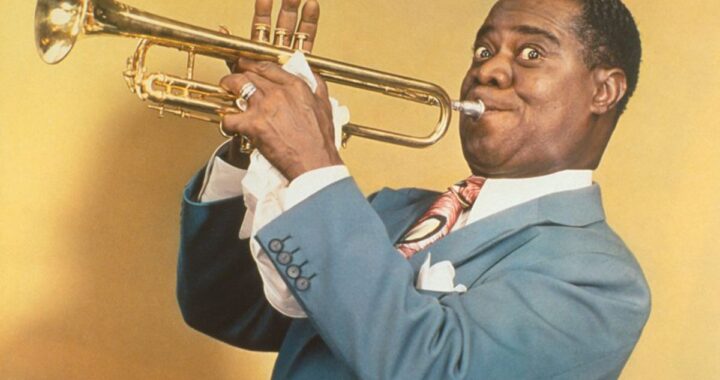
Freemasonry inspired many people over the centuries. Some of the most influential musicians of their times, whose works have lasting impact to this day, were members of the fraternity. Here are some of the more well known ones.
Franz Joseph Haydn
1732 – 1809
Was initiated in February 1785 in “Zur wahren Eintracht” Lodge in Vienna, Austria.
Wolfgang Amadeus Mozart
1756 – 1791
Was initiated on December 14, 1784 in “Zur Wohltätigkeit” Lodge in Vienna, Austria
Ludwig van Beethoven
1770 – 1827
It is generally accepted that he was a Freemason, but the evidence of when he was initiated and what lodge he joined has been lost.
Felix Mendelssohn
1809 – 1847
There is no specific evidence that he ever joined the fraternity.
Franz Liszt
1811 – 1886
Was initiated in 1841 at “Zur Einigkeit” Lodge in Frankfurt am Main, Germany.
Johannes Brahms
1833 – 1897
There is no specific evidence that he ever joined the fraternity.
Gilbert and Sullivan
Sir William Schwenck Gilbert
1836 – 1911
Was raised on June 23, 1871 in St. Machar Lodge No. 54 in Aberdeen, Scotland.
Sir Arthur Seymour Sullivan
1842 – 1900
Was raised on January 30, 1866 in Harmony Lodge No. 255 in Richmond, England.
John Philip Sousa
1854 – 1932
Was raised on 10 November 1881 at Hiram Lodge No. 10, Washington D.C.
Giacomo Puccini
1858 – 1924
Gustav Mahler
1860 – 1911
Jean Sibelius
1865 – 1957
Was a member of Soumi Lodge, No.1 in Helsinki, Finland.
Irving Berlin
1888 – 1989
Was raised on June 3, 1910 in Munn Lodge No. 190 in New York, New York.
Duke Ellington
1899 – 1974
Was a member of Social Lodge No. 1 PHA in Washington D.C.
Louis “Satchmo” Armstrong
1901 – 1971
Was a member of Montgomery Lodge No.18 PHA in New York, New York.
Count Basie
1904 – 1984
Was a member of Medina Lodge No. 19 PHA in New York, New York.
Nat King Cole
1919 – 1965
Was a member of Thomas Waller Lodge No. 49 PHA in Los Angeles, California.
John Entwhistle (The Who)
1944 – 2002
Was a member of Ezekiel Bates Lodge, Attleboro, Massachusetts.
Rick Wakeman (Yes)
Born 1949
He is a Past Master of Chelsea Lodge No. 3098 E.C. in London, England.
Phil Collins (Genesis)
Born 1951
There is no specific evidence that he ever joined the fraternity.
Mel Gaynor and Derek Forbes (Simple Minds)
Both are members of Shalom Lodge No.1600, Glasgow, Scotland.
Marshall Goodman (Sublime)
Born 1971
Was initiated in 2015 at Lakewood Lodge No. 728 in Long Beach, California.
Brad Paisley
Born 1972
Is a member of Hiram Lodge No. 7 in Franklin, Tennessee.
Tom DeLonge (Blink 182)
Born 1975
Is a member of Widow’s Sons Lodge No. 17 PHA in Kansas City, Missouri.
Apathy (Hip Hop)
Born 1979
He is a member of Coastal Lodge No. 57 in Stonington, Connecticut.
Brother Patrick Sarsfield Gilmore (December 25, 1829 – September 24, 1892) was an Irish-born American composer and bandmaster who lived and worked in the United States after 1848.[1] While serving in the Union Army during the U.S. Civil War, Gilmore wrote the lyrics to the song “When Johnny Comes Marching Home”. This was published under the pseudonym Louis Lambert in September 1863.
Gilmore was born in Ballygar, County Galway. He started his music career at age fifteen, and spent time in Canada with an English band.[2] He settled in Boston, Massachusetts in 1848, becoming leader of the Suffolk, Boston Brigade, and Salem bands in swift succession. He also worked in the Boston music store of John P. Ordway and founded Ordway’s Aeolians, a group of blackface minstrels.[3] With the Salem Band, Gilmore performed at the 1857 inauguration of President James Buchanan.
“Front Piazza of Grand Hotel, 4 P.M. with Gilmore’s Boston Band, Saratoga, N.Y.,” mid-19th century
In 1858 he founded “Gilmore’s Band,” and at the outset of war the band enlisted with the 24th Massachusetts Volunteers, accompanying General Burnside to North Carolina. After the temporary discharge of bands from the field, Governor Andrew of Massachusetts entrusted Gilmore with the task of re-organizing military music-making, and General Nathaniel P. Banks created him Bandmaster-general.
When peace resumed, Gilmore was asked to organize a celebration, which took place at New Orleans. That success emboldened him to undertake two major music festivals at Boston, the National Peace Jubilee in 1869 and the World’s Peace Jubilee and International Musical Festival in 1872. These featured monster orchestras of massed bands[4] with the finest singers and instrumentalists (including the only American appearance by “waltz king” Johann Strauss II) and cemented Gilmore’s reputation as the leading musical figure of the age. Coliseums were erected for the occasions, holding 60- and 120,000 persons. Grateful Bostonians presented Gilmore with medals and cash, but in 1873 he moved to New York City, as bandmaster of the 22nd Regiment. Gilmore took this band on acclaimed tours of Europe.
It was back on home soil, preparing an 1892 musical celebration of the quadricentennial anniversary of Christopher Columbus’ voyage of discovery, that Gilmore collapsed and died in St. Louis.[1] Patrick S. Gilmore was buried in Calvary Cemetery (Queens, New York).[5]
Famous 22nd Regiment March -Gilmore’s “Famous 22nd Regiment March” (1874), played by the United States Marine Band. In many ways Gilmore can be seen as the principal figure in 19th-century American music. He was a composer, the “Famous 22nd Regiment March” from 1874 is just one example. He held the first “Promenade Concert in America” in 1855, the forerunner to today’s Boston Pops. He set up “Gilmore’s Concert Garden”, which became Madison Square Garden. He was the Musical Director of the Nation in effect, leading the festivities for the 1876 Centennial celebrations in Philadelphia and the dedication of the Statue of Liberty in 1886. In 1888 he started the tradition of seeing in the New Year in Times Square.[citation needed]
Gilmore was the first American band leader to feature the saxophone. The French Garde Republicaine military band performed at the World Peace Jubilee and Gilmore was sufficiently impressed that in the following year he reorganized his band to include the instruments that the French band introduced to American ears. The new band included a soprano-alto-tenor-baritone saxophone section featuring Edward A. Lefebre (1834-1911) as soloist, which also performed as a quartet that became the archetype of the standard classical saxophone quartet.[6] The promotion by Gilmore and Lefebre resulted in the first production of American saxophones and a shift of the center of the saxophone world from France to the United States around the turn of the century.[7]
In 1891, he played for some of Thomas Edison’s first commercial recordings. Musically, he was the first arranger to set brass instruments against the reeds, which remains the basis for big band orchestration. His arrangements of contemporary classics did a great deal to familiarize the American people with the work of the great European musical masters. Patrick Sarsfield Gilmore was inducted into the Songwriters Hall of Fame in 1970.